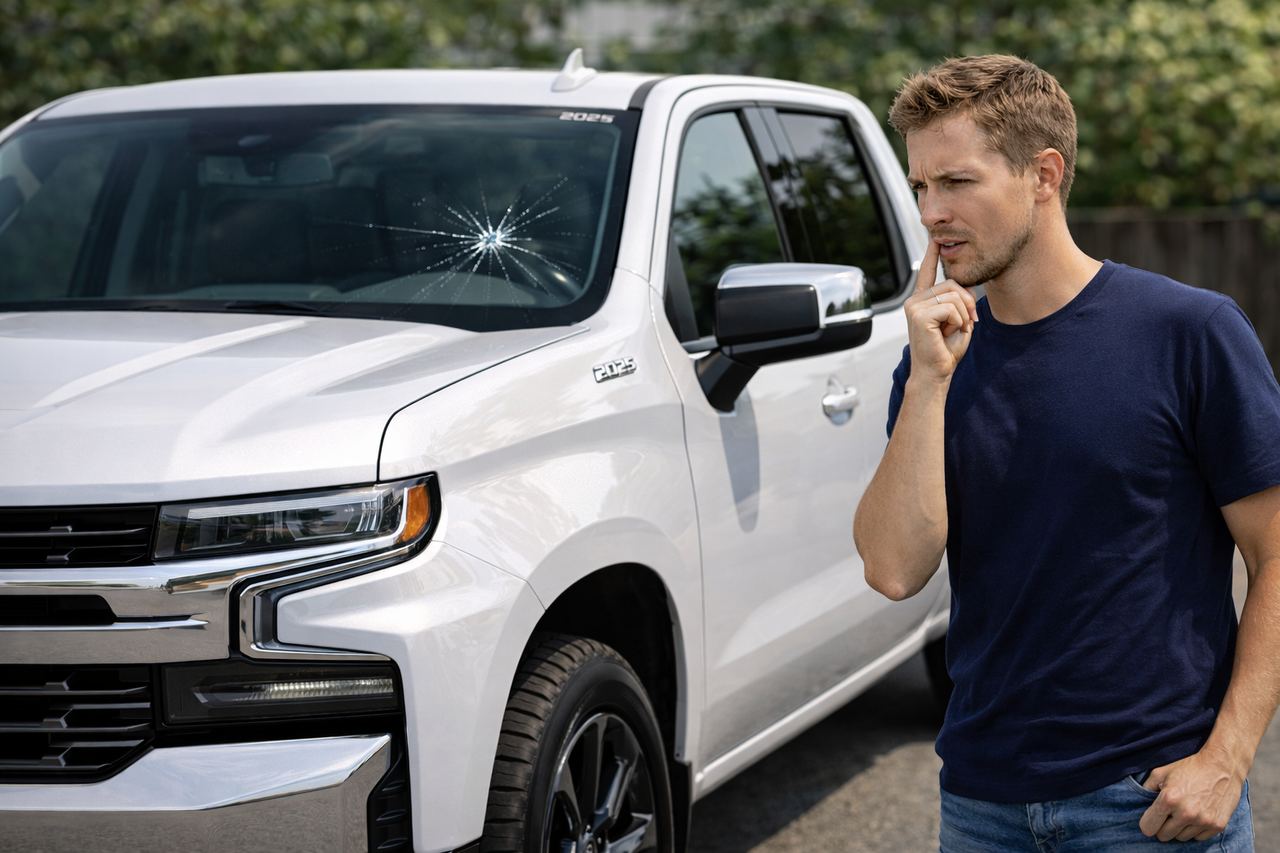
North Carolina roads treat windshields like fair game. You leave your driveway with clear glass, then somewhere between Business 85 and Wendover your hood catches a stone and you hear that sharp tick. A coin-sized star blooms in the glass, and for the rest of the drive you can’t shake the worry that the crack will spread. I’ve worked around High Point long enough to know how quickly a tiny chip can turn into a jagged scar from inspection sticker to roofline. The good news is that, with the right timing and technique, most rock chips can be stabilized and made nearly invisible. The better news is that High Point has a strong network of technicians who take this work seriously, whether you prefer a shop visit or a mobile appointment at home.
This is the practical guide I give friends and customers who ask about chip damage, repair versus replacement, and how to avoid paying twice. I’ll keep the focus on how it plays out here in the Triad: our climate swings, our mix of city and rural roads, and the way local insurance carriers handle glass claims.
Why small chips become big problems
Glass seems rigid, but a laminated windshield behaves more like a stressed membrane glued to the body. That coin-sized cone you see on the surface has microscopic fissures radiating from the impact point. Heat, cold, and body flex magnify those tiny cracks, and High Point serves up all three. In spring, a frosty morning can warm into a 70-degree afternoon. In summer, a parked car can hit 140 degrees inside. If you blast the defroster or slam a door with a window up, you spike pressure in the cabin. That pressure has to move somewhere, and the weak spots in your windshield take the hit.
The most common failure pattern is a slow spread, often overnight. You go to bed with a chip the size of a pencil eraser, and you wake up to a crack snaking toward the edge. If the damage reaches the edge, the glass loses a lot of its engineered strength and your repair options shrink.
I’ve also seen chips that sit unchanged for a year, which makes people complacent. Then we get a cold snap in January, someone pours warm water to clear frost, and the fracture runs instantly. You cannot predict which way a chip will go, which is why the best practice is to seal and stabilize it early.
How professional chip repair actually works
A proper chip repair is both mechanical and chemical. The goal is to stop the crack from spreading and restore optical clarity. Cosmetic improvement matters, but structural stability comes first.
A trained tech will clean and dry the impact site, then mount a bridge with a vacuum chamber over the damage. The vacuum pulls air and moisture out of the crack network, which is crucial on humid North Carolina days. Resin, matched in viscosity to the chip type, is injected to replace the air. Ultraviolet light cures the resin. The surface pit gets a thicker finishing resin, then a razor scrape and polish. When done right, the chip becomes a smooth, sealed lens that refracts light almost like healthy glass. In direct sun you may still see a faint scar at certain angles, which is normal. The more important result is that the crack network is filled and less likely to spread.
Time matters because chips take on moisture and dirt. If you drive for a week with a bare chip through two rainstorms, the resin has to displace more contaminants and the finished repair looks cloudier. That’s part of why “same day auto glass High Point” is more than a convenience tagline. Speed helps quality.
Repair versus replacement, based on real thresholds
People ask for a magic number. There isn’t one, but there are reliable criteria that guide the decision.
- Size and type. A clean bullseye or star break up to roughly a quarter in diameter is usually repairable. A long crack is trickier. Some shops will attempt up to six inches if the ends are tight and not contaminated. Much longer, and replacement becomes the safer call. Location. Damage in the driver’s primary sight line, roughly the width of the steering wheel and the height between the dashboard and the visor line, calls for stricter standards. Even a well-filled chip can leave a small blur or light scatter. If you drive at night often, or if the defect sits right at your eye level, the visual artifact can be distracting. In that case, windshield replacement High Point is often the responsible choice. Edge proximity. If the chip sits within an inch or two of the glass edge, the risk of flex-induced propagation is high. Repairs near the edge rarely hold as well. Layering. If the impact penetrated both layers or you can feel serious delamination, no reputable tech will try to fix it. That glass needs to come out.
When replacement is the right call, quality matters. Windshield calibration is another factor many drivers don’t anticipate. Late-model vehicles use cameras and sensors behind the glass to support lane assist, automatic high beams, and emergency braking. After a windshield replacement, those systems often require static or dynamic calibration to meet OEM specifications. Some High Point shops have the targets and software in-house, others partner with calibration centers in the Triad. If your dash shows a lane-keep or collision warning light after installation, ask about ADAS calibration. It is not an upsell. It is part of making the car safe.
Insurance, deductibles, and the High Point reality
Glass claims in North Carolina usually fall under comprehensive coverage. Whether a repair is free depends on your policy. Many carriers waive the deductible for chip repair because it prevents larger claims later. Replacement typically triggers the full comp deductible. On a lot of policies in this region, that number sits between 250 and 500 dollars.
What I see locally: if you catch a chip early, high point auto glass shops can often process a no-cost repair through insurers, sometimes without you dialing in. For replacement, the out-of-pocket calculus depends on glass options. Rain sensors, acoustic interlayers, heads-up display zones, and heated wipers can raise the panel cost. If your deductible is close to the glass price, paying cash can be competitive. If you have zero-deductible glass written into your policy, replacement becomes straightforward. Bring your VIN so the shop can decode the build and order the correct part. Guessing wrong on sensor brackets or tint bands wastes time.
What great chip repairs look like in practice
Two scenarios stick in my head. A delivery driver out by Skeet Club Road had a star break dead center in the passenger side. We reached him the same afternoon. The chip was dusty but dry, and the star legs were short. After vacuum and fill, the star nearly vanished unless you caught it with polarized sunglasses. He put another 30,000 miles on that windshield before trading his van, with no spread.
Another case on a college student’s Civic near N Centennial Street was less forgiving. Small half-moon chip, but it sat an inch from the edge. She’d washed the car and then parked in shade. Moisture had wicked into the fissures. We tried a careful resin pull, and it sealed for a few weeks. November brought a quick cold snap. The crack ran to the edge in High Point auto glass repair one night. We replaced the glass and she vowed to call within a day next time. That edge distance matters more than most people realize.
Mobile, shop, and timing
Scheduling plays a bigger role than any adhesive chemistry. The question I ask first is not “what brand of resin,” but “how quickly can we get to it, and where will the car sit while the resin cures.” Mobile auto glass High Point services make a lot of sense for chips because the handling time is short and the equipment is portable. A parking lot repair at your office works fine if we can get shade or a simple canopy to control glare and heat during vacuum. A five to ten minute cure under a UV lamp is usually enough for surface polish, then the car goes right back into service.
Replacement is a different animal. The urethane needs safe drive-away time. On a warm day with high modulus urethane, that can be an hour or two. On a damp, cold morning, double it. A shop environment lets the tech control temperature and alignment, which helps with ADAS calibration and leaks. That said, emergency auto glass High Point calls after a break-in or on a road trip do happen. A good mobile crew can stabilize the opening with temporary film and install on-site when conditions allow, then schedule calibration in-town.
Same day auto glass High Point options are real for most chip repairs and for many replacements if the correct glass is available. Supply chain has improved since the worst of the backorder days, but specialty windshields still take a day or two. Communicate your timeline and be upfront about your commute needs. A shop that promises same day for every vehicle is guessing.
The local environment: what High Point roads do to glass
A lot of chips start on bypass projects and secondary roads that run next to new construction. Loose aggregate hides in the lane, then a trailer kicks it up. If you commute on 311 or hit the corridors near growth areas, you have higher exposure. Summer thunderstorms drop a mix of debris. After a storm, gutters and shoulders bleed gravel into intersections. The first dry day after rain is prime time for chips.
Seasonal temperature swings drive crack propagation. Our early spring days, with frosty windshields at sunrise and warm commutes home, are responsible for a disproportionate share of spreads. In July and August, I tell people to crack a window when parking long-term. A small vent reduces cabin pressure spikes and helps. It won’t fix an existing crack, but it minimizes the extra stress.
What to do in the first hour after a chip
A simple routine boosts your odds of a near-invisible repair.
- Cover the impact point with clear tape as soon as it is safe. Packing tape or clear nail wrap works. The goal is to keep water and grit out until a tech can vacuum the chip. Avoid pressure shocks. Don’t slam doors with the windows up. Don’t blast the defroster on the coldest setting across the chip. Try moderate temperature changes for the drive home.
That’s it. No superglue, no DIY epoxy, no rubbing alcohol. Home kits are tempting, but I see more failures from rushed resin than from waiting a day for professional help. If you are hours from service and expecting rain, the clear tape is your best friend.
Choosing a shop you can trust
The local market has several solid providers for auto glass repair High Point. Focus on behaviors, not brand slogans. Look for technicians who pull the VIN before quoting. That avoids wrong glass orders. Ask them to explain repair limits in normal language. If a shop says they can fix anything, keep scrolling. Discuss ADAS needs if your car has cameras on the windshield. A reputable shop will mention calibration before you do and will outline where it happens.
For car window repair High Point after a break-in, check that the shop can vacuum the door cavity and recover the regulator fasteners. A rushed install can leave rattles or a crooked sash. For car window replacement High Point, confirm whether they reuse or replace vapor barriers and clips. Cold weather makes brittle clips snap. Good shops stock extras.
If you need auto glass replacement High Point on a tight schedule, ask about OEM versus aftermarket glass. The difference varies by model. On some vehicles, aftermarket panels from top-tier manufacturers perform and fit well. On others, acoustic laminates and HUD zones read differently under the projector. If your car has a heads-up display or infrared coatings for climate control, OEM often avoids headaches. A candid shop will tell you when the aftermarket is fine and when it is not.
Cost ranges you can plan around
Prices float with glass features and availability, so treat these as typical ranges around High Point, not guarantees. Chip repair usually lands between 80 and 150 dollars retail. Insurance often covers it in full. A basic windshield on an older sedan without sensors can run 250 to 400 installed. Midline vehicles with rain sensors or acoustic layers climb to 400 to 700. Late-model SUVs with camera brackets, heated elements, and HUD can cross 1,000 dollars. Calibration adds 100 to 300 depending on the system and whether it is static, dynamic, or both.
If someone quotes a rock-bottom price far under the typical range for your vehicle, ask what is excluded. Common omissions include moldings, clips, disposal fees, and calibration. Low-cost urethane with long cure times can also slow your day. Sometimes a deal is fine, particularly on older cars, but transparency is the key.
Safety inspections, visibility, and legal concerns
North Carolina safety inspections check windshield condition for the driver’s direct view. A chip or crack that compromises clear forward visibility can fail an inspection, even if it is not structural. The rule of thumb I use is straightforward: if your eyes are drawn to the defect every few seconds during a test drive, an inspector may note it. That is another reason to shift from repair to replacement when the damage sits squarely in the sight line. After replacement, inspect wiper sweep, rain sensor function, and mirror mount adhesion before you leave. If something feels off, speak up immediately. Fixing a minor alignment while the urethane is green is easier than after a full cure.
What changes after a replacement
Modern urethanes are strong, and when a windshield is installed correctly, the bond contributes to the vehicle’s roof crush resistance and airbag support. For the first day or two, treat the car gently. Avoid car washes with high-pressure jets aimed at the glass edges. Leave a window cracked for the first evening if temperatures drop, to ease pressure cycles. Check the cabin for the faint smell of cured adhesive, which should fade quickly. If you hear wind noise you didn’t have before, it could be a molding alignment issue or a gap. Small fixes are easy when addressed early.
For vehicles with driver assistance systems, pay attention over the next week. If the lane-keep feels twitchy or drifts, return for calibration. Dynamic procedures rely on a test drive with specific targets and speeds, and the roads around High Point sometimes complicate that process with variable traffic. A diligent shop will repeat the procedure until the on-board system reports alignment within spec.
When a repair isn’t the answer
Some chips look modest and still fail a repair. If the glass took a secondary microfracture under the surface, you might see a faint haze remain. That haze is the light scattering through unfilled microcracks. It is cosmetic, not structural, but it can bother certain drivers at night. If you do a lot of highway driving after dark, even a successful repair can be more noticeable in your peripheral vision than you expect, especially against LED headlights. It is worth an honest talk before committing if you are sensitive to optical artifacts.
There is also the matter of multiple chips. One or two well-spaced repairs are fine. Four chips, even if each is small, begin to create a constellation of slight distortions. If they cluster in your forward view, a new windshield can restore comfort and reduce eye strain.
How to reduce your odds of another chip
We cannot pave the Triad ourselves, but a few habits help. Increase following distance behind dump trucks and trailers with uncovered loads. That is not just courtesy, it’s pragmatic. The more room you leave, the less likely you are to intercept debris. When road crews lay fresh stone or tar and chip, the signs are not suggestions. Take alternate routes for a day if you can. In summer, shade the windshield when parking to manage heat cycles. In winter, resist the urge to douse icy glass with warm water. Use a proper scraper and gentle defrost.
It also pays to keep wipers fresh. Old wiper blades drag grit across the glass and etch micro scratches, which scatter light and make night driving harder. Replacing blades twice a year costs less than one oil change and keeps a new or repaired windshield clear longer.
Where High Point services fit in
High Point sits in a sweet spot. We are close to suppliers in Greensboro and Winston-Salem, and many local shops get morning and afternoon deliveries. That shortens wait times for oddball parts. The mobile crews that cover our neighborhoods are used to apartment lots, office parks, and tight driveways, and they plan around school dismissal and church traffic to keep appointments punctual. If you need help at your house off Lexington Avenue or at a job site near the furniture market, chances are someone can meet you without you losing half a day.
If you are unsure whether you need auto glass repair High Point or full auto glass replacement High Point, take two photos: one straight on, one at a shallow angle with a coin next to the chip for scale. Share the VIN. A competent service writer can tell you in minutes where you stand, how soon they can come out, and whether your insurance waives repair costs. The best shops don’t push you toward the higher ticket. They protect their reputation by steering each case the right way.
The bottom line for rock chips here in town
Speed and judgment win. Cover the chip, avoid pressure spikes, and schedule a repair as soon as practical. Most rock chips in this area repair well if handled within a few days. When they don’t, the path to a proper windshield replacement High Point is clear if you work with people who explain their choices and respect yours. The difference between a hassle and a smooth fix often comes down to a 10-minute call and a next-day slot on a trained technician’s calendar.
Whether you need a quick windshield repair High Point in a parking lot or a full replacement with camera calibration in a controlled bay, the resources are here. Cars change, glass technology evolves, and our roads will continue to chip windshields with annoying regularity. What doesn’t change is the simple recipe for success: keep contaminants out, get skilled hands on the problem quickly, and make the call between repair and replacement with your safety and your daily comfort in mind.